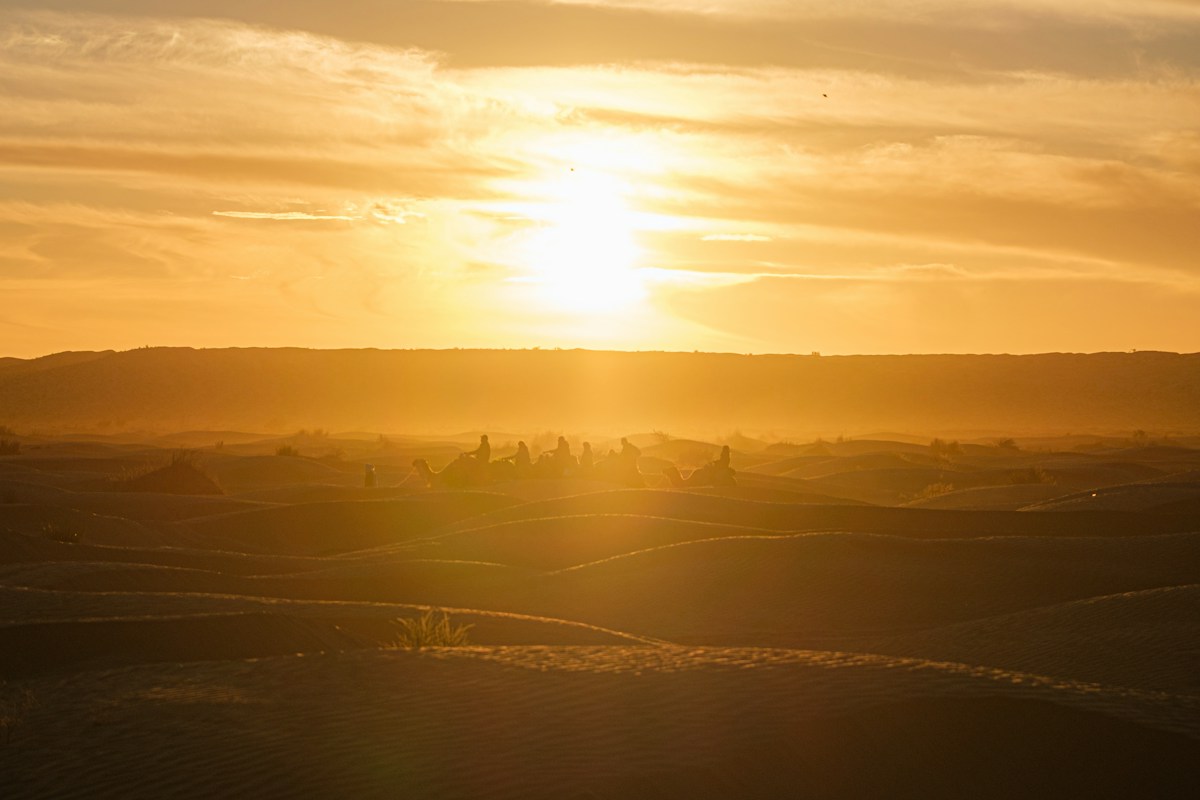
Why the Sahara Has Fascinated Travelers for Centuries
The Sahara is not just a desert. It's a living myth, a space that transcends geography to touch something deeply human. Since antiquity, it has attracted explorers, mystics, artists and travelers seeking something else.
The Call of the Void
The Fascination with Nothingness
The Sahara represents the ultimate void — 9 million km² where humanity fades:
| Dimension | Comparison |
|---|---|
| Area | Larger than Australia |
| Population | 2.5 million (0.3 inh/km²) |
| Cities | Less than 10 over 10,000 inh |
This void attracts because it allows:
- Introspection without distraction
- Perspective on our lives
- Humility facing immensity
- Total freedom of thought
The Desert as Mirror
"The desert is not a place, it's a mirror." — Théodore Monod, explorer
In the Sahara, without familiar landmarks, we are confronted with ourselves.
The Sahara in Culture
In Literature
The desert has inspired masterpieces:
- "The Little Prince" by Antoine de Saint-Exupéry
- "Desert" by J.M.G. Le Clézio (Nobel Prize)
- "Wind, Sand and Stars" by Saint-Exupéry
"What makes the desert beautiful is that somewhere it hides a well." — The Little Prince
Why the Sahara Still Calls Us
The Antidote to Modernity
In a world saturated with:
- Noise → The Sahara offers silence
- Speed → The Sahara imposes slowness
- Permanent connection → The Sahara guarantees disconnection
- Complexity → The Sahara brings back to essentials
What the Desert Teaches
The Sahara teaches:
- Patience — Everything takes the time it needs
- Humility — We are tiny
- Essentials — Water, food, shelter, humanity
- Beauty — It's everywhere, even in emptiness
- Resilience — Life survives in the extreme
Your Turn to Be Fascinated
The Sahara may have been calling you for a long time. This millennial fascination that touched Ibn Battuta, Saint-Exupéry and Théodore Monod is the same that attracts you.
There's only one way to understand: go there.
The Sahara awaits you. Ready to discover why it has fascinated humanity forever?
Auteur